Sunday, March 19, 2023

Balkans day 18: Serdica

Sofia, or Serdica as it was called in ancient times, is – along with Belgrade – the only truly big city I’ve visited on this trip. My modus operandi here so far is roughly the same as it’s been everywhere else: wander around, see nice buildings, go to museums, drink nice drinks, eat nice food. The difference here is that my ramblings are not purely stochastic this time: I have a guide. My erudite host, B., is showing me around the city.

In the evening we explore the city centre. In the morning we return and almost retrace our steps, this time looking into some buildings along the way that were closed the night before.

Sveta Nedelya church in evening light

University main entrance hall at night

National Palace of Culture at night

Synagogue during the day

Presidential guards on duty

Among other things, I learned that Serdica was almost picked as capital of the Eastern Roman Empire by Constantine the Great (himself born in Niš), though was passed over in favour of Byzantium, later Constantinople. And the first part of the name Serdica is cognate with Greek kard-, Latin cord- and English heart. In the afternoon I visited the archaeological museum to get my fix of old physical objects. There’s still much to see, and I look forward to spending a bit longer here than I have in other places in the Balkans.

Saturday, March 18, 2023

Balkans day 17: Into Bulgaria

Short update today. A coach took me across the border from Thessaloniki into Bulgaria at Kulata – mostly an uneventful journey, with mountains looming large in the borderlands. I was dropped off at Sandanski, but didn’t see anything of the town; a twenty-minute walk from the petrol station where I arrived to the railway station took me through a rough-and-ready industrial area. The train was punctual from start to finish, though, and even had at-seat power sockets.

The train arrives at Sandanski

Platform cats

Terrain south of Blagoevgrad

The landscape, as we head north along the Struma valley, reminds me of the North Pennines; not exactly what you’d call mountains, but definitely big and imposing as hills go. Occasionally snow-capped mountains do rear their heads in the distance. I’m already getting the impression of a big and diverse country, though not, I’m told, one with a large population: Wikipedia says under 7 million, of whom over a million live in the Sofia urban area.

Speaking of Sofia, in mid-afternoon I arrive there, and a new chapter begins.

Friday, March 17, 2023

Balkans day 16: Salonika

Thessaloniki – or Salonika as it was often referred to in twentieth-century literature, the title I’ve used for this blog post for the sake of Balkan thematic consistency – is a city with a hell of a history. Founded by a contemporary of Alexander the Great (and the husband of his half-sister) circa 315 BC, co-capital of the Byzantine Empire for a time, and the only majority-Jewish city in the world during the sixteenth century, there is history on every street corner. Quite literally: you’ll be walking along past apartment blocks along a main road and suddenly come to a fenced-off hole in the ground where some Archaeology (TM) is taking place.

Sea view from the top of the White Tower

Random dig site

I got up scandalously late today (What? I’m on holiday, after all. Don’t judge me!), perhaps because I crossed a time zone boundary into Greece yesterday, which I assume caused me to be jetlagged. A beautiful Mediterranean day today, with no sign of yesterday’s rain. First stop was the Church of Saint Demetrios, an impressive building dedicated to the patron saint of the city.

Chancel of Saint Demetrios

Ciborium with saint’s remains

Then it was off to the White Tower, and to a nearby restaurant with moussaka – need to get my Greek food fix in today, as I’m moving on tomorrow. Taking my time over the moussaka meant that I missed the archaeological museum, which closes at 15:30, so I went on a wander around some more nice parts of town.

I also made this video of the trajectory of the first (western) part of my trip, which I hope you enjoy!

Thursday, March 16, 2023

Balkans day 15: Into Greece

From North to South Macedonia today. Another early start to get onto a gloriously dilapidated train, two graffiti-covered, comfortable compartment carriages hauled by a grimy loco.

The train

In another Balkan missed opportunity, the track runs all the way to my destination in Greece, but the train only goes as far as the sleepy North Macedonian border town of Gevgelija, so that’s where I’m headed. It’s still a three-hour journey, or three and a half as it turns out, along the Vardar river valley, which rushes past behind murky windows. The terrain feels like it’s getting more Mediterranean as we go, leaving the karst outcrops behind, but maybe that’s my imagination.

Last gasp of the karst

In Gevgelija I have time for a coffee (or at least I think I do). I use Google Maps to find a nice place near the station, where the owners react with incredulity to my presence but the coffee is good. Making my way to the bus station, I have to run to stop the bus I’m supposed to be catching from departing 15 minutes early. The nearby border crossing is slow and impersonal, and once we’re past that the bus books it along the highway to Thessaloniki, where I’m going.

I’ve been to Greece before, but never overland, and not to this area (a week on Lesbos and a change of planes at Athens airport). Thessaloniki is a different kettle of fish. Greek’s second city, it’s big, bustling, and Balkan. Right now it’s also a very angry city. At the end of February, two trains collided head-on outside the nearby town of Larissa, killing 57 and injuring dozens of others. Since then there have been vociferous protests, especially here. One such protest march was snaking its way past the bus station as I arrived. The whole rail system has ground to a halt, with 24-hour rolling strikes – which will be a problem for my onward journey, but I’ll cross that bridge when I come to it.

I check in to my hotel. When I reemerge, the rain that has followed me from Belgrade and Skopje has found me again. I make my way between blocks in the sodden darkness to the Mediterranean, and thence to a restaurant, where I order a range of meze and start writing this blog post. In the present tense.

Aristotle Square

Mediterranean with the White Tower in the distance

Wednesday, March 15, 2023

Balkans day 14: Skopje

I got up today with high hopes: the plan was to climb a mountain! Specifically, Vodno, the mountain that overlooks Skopje. Unfortunately, it was raining heavily in the morning, and the top of the mountain was in the clouds, so I decided instead to hop across puddles and explore the old town.

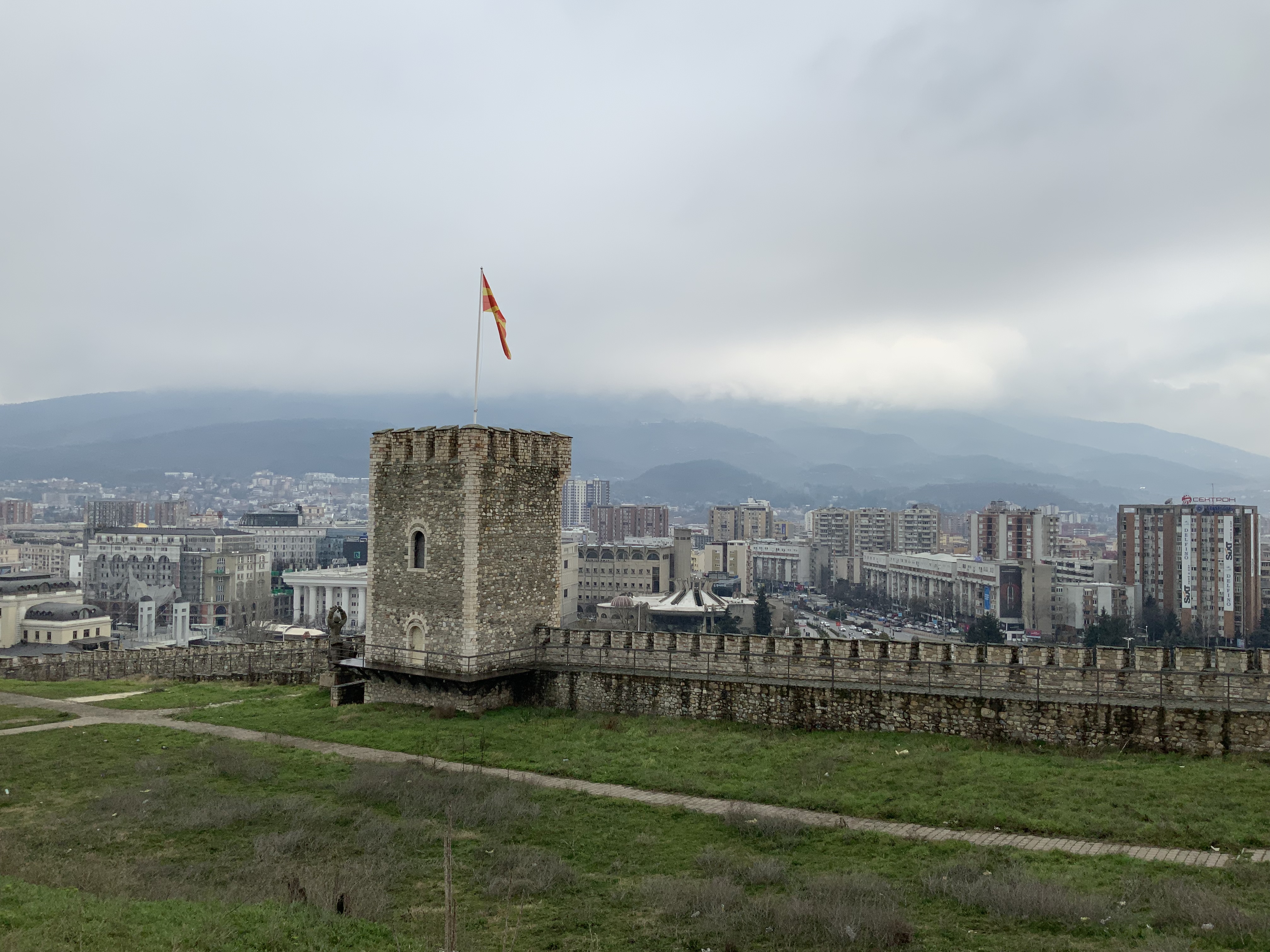
View from the Kale Fortress, with Vodno in the background

First stop was the Holocaust Memorial Centre for the Jews of Macedonia. This state-of-the art museum gives a harrowing account of the origins and ultimate fate of the country’s Jewish population: of eight thousand Macedonian Jews, only 350 survived the Holocaust, with most of the rest being gassed at Treblinka. There’s also information about the Sarajevo Haggadah (much more than there was in Sarajevo) and the origins of the Macedonian Jews; I didn’t know that they mostly came there after their expulsion from Spain at the end of the fifteenth century, and originally spoke Ladino/Judeo-Spanish.

Monument to the Jews of Macedonia

Onward into the old bazaar. This winding section of town isn’t as touristy as its Sarajevo counterpart, but feels more like a real part of the city.

Bazaar street

Caravanserai

I also visited Skopje’s Kale Fortress, high above the river. The views are spectacular, but the fortress itself is a bit of a dump, a desolate, litter-filled place. Lonely Planet draws a Game of Thrones comparison, which I couldn’t really see. It’s a shame Skopje couldn’t have spent a bit more money on this at the same time as it was constructing a vast neoclassical frontage along the river.

After this, with the weather persisting in being not very nice, I retreated to my hotel room to rest. Tomorrow is a big travel day.

Tuesday, March 14, 2023

Balkans day 13: Into North Macedonia

Stone Bridge and fortress at Skopje

A relatively uneventful day today, which is no bad thing after nearly two weeks on the road. In the morning I went to the old part of Pristina and the Ethnographic Museum, which, though praised by both TripAdvisor and the guidebook, turned out to be just an old house with three rooms and no signage or other information.

In the Ethnographic Museum

Xhamia e Madhe mosque

Macchiato

I explored the town some more and had another macchiato before heading to the bus station. There is a direct railway line between Pristina and Skopje, but apparently no one can be arsed to run trains on it, and there’s a bus every couple of hours anyway. (Also, weirdly, the Interrail pass isn’t valid in Kosovo.) The minibus was quiet and the journey, at two hours, was very speedy compared to some of the other stretches I’ve been on.

North Macedonia is another brand new country for me, and it’s somehow comforting to be surrounded by Slavic again. I did some Googling and some maths and confirmed that all the countries I’ve been to on this trip put together, since (and including) Croatia, up to (and including) North Macedonia, have a total area that is less than that of the UK. From the futuristic-looking bus/railway station complex in Skopje I headed into town along the river bank. Several neoclassical buildings have popped up here over the last decade as part of a deliberate initiative to change the face of the city, and Lonely Planet is rather condescending in emphasizing how tacky it thinks these are. I think the sneering is unwarranted! The effect is impressive, and I admire the planners of Skopje for aiming for something with a bit of gravitas instead of the cookie-cutter glass-fronted shite that’s spread like a plague across the capitals of Europe.

Archaeological Museum across the Bridge of Art

Alexander the Great monument

Okay, I’ll admit that that monument is a bit much, though.

Monday, March 13, 2023

Balkans day 12: Kosovo

After the hit-and-miss affair that was the bus ride over here, and arriving heavily delayed, it was reassuring to be staying in a rather fancy hotel right in the centre of Pristina (on a nice cheap off-season deal). Restaurants were largely closed, so I grabbed a Burger King and settled in.

What I’d heard was really outstanding about Kosovo was its natural beauty, which I wouldn’t get to experience by shuffling around the cafés of Pristina. So today I’d booked a tour around Peja in the western part of the country. Kosovo, like Montenegro, is tiny, and driving all the way from one side to the other takes less than two hours, even given the horrific traffic in Pristina. Our first stop was the White Drina waterfalls.

Water falling

In the spray zone

My guide, V., said that they were unusually full of water because of the recent rain and the melting mountain snow. They were certainly impressive. On the way we passed a couple having a wedding photoshoot there.

Next up was the Rugova gorge, source of almost all of Kosovo’s mineral water. A fun experience here. There was a glass-floored panoramic viewpoint high above the gorge. As I stepped onto it, I heard an ominous splintering sound, and looked down to see cracks spreading across the floor below me! Turns out there was ice on top of the glass floor, and it was that that was doing the cracking, fortunately.

View from the dubious viewpoint

The final stop on the tour was the Patriarchate of Peć, one of three Serbian Orthodox monasteries in Kosovo and a UNESCO World Heritage Site, dating mostly to the thirteenth and fourteenth centuries. Because of ethnic-religious tensions, the monastery is guarded by police, and you have to show your passport to enter. Inside it’s an unbelievably peaceful place, with a few nuns shuffling about and birdsong as the soundtrack. V. said that there were often cows there too, as the monastery is self-sufficient. Photos weren’t allowed in the churches, but the interior was covered in beautiful blue-hued frescoes.

Ruins and the church complex in the Patriarchate

Driving back across Kosovo, snow-capped, almost cartoon mountains seemed to tower on every horizon. It was mid-afternoon before we got back to Pristina; I can thoroughly recommend the tour. Next I returned to my normal mode, shuffling round the cafés of Pristina. A traveller on the bus yesterday had told me that Kosovo has the world’s best macchiatos, so I tried a few out. Also visited the cool, minimalist cathedral and the NEWBORN monument commemorating Kosovo’s declaration of independence in 2008.

The Palace of Youth and Sports, a public building in Pristina

Pristina is an extremely bookish city! There are bookshops everywhere, and little cabins packed with books on the central pedestrian streets. The city isn’t picturesque, but seems to be bursting with energy. I’ll have a little more time to explore tomorrow before I head on to yet another country.

Sunday, March 12, 2023

Balkans day 11: Niš

A bright and sunny Sunday, and a leisurely start. Niš wasn’t top of my list of places to visit; in fact I was only there because it was a convenient staging post for my next onward journey. But I’ve pretty much fallen in love with the place (though I wonder to what extent the fact that this is the first properly sunny day since Croatia plays a role). It has great food and coffee, and like Belgrade is built around a massive star-shaped fortress. This one is a pleasant park, with all sorts of remnants going back to Roman times - as well as coffee shops.

Fortress gate

Serbia, land of fortresses and jazz

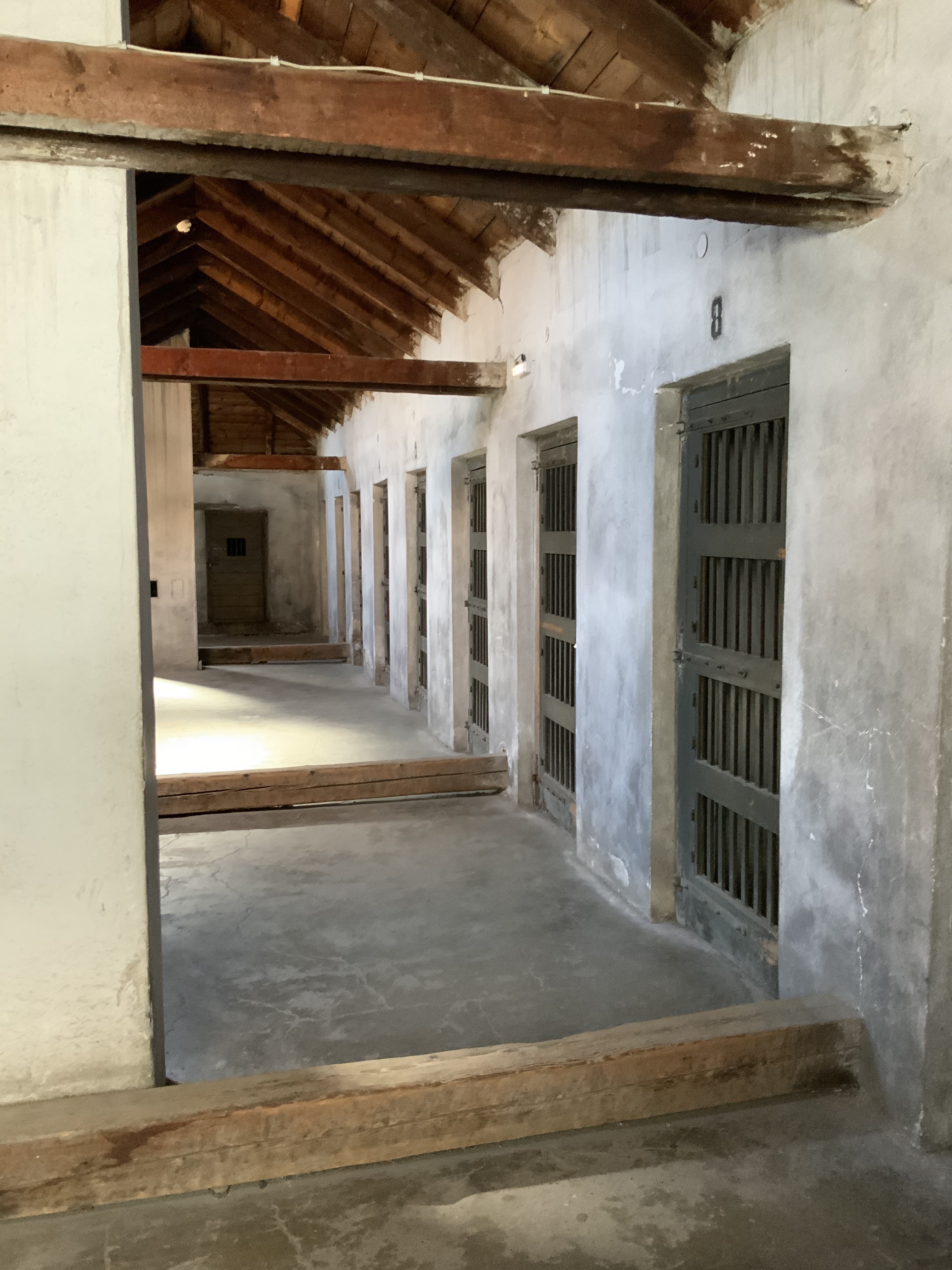
Through the fortress and out the other side, I felt ready for some more misery, so I visited the local (and infamous) Nazi concentration camp, named “Red Cross” after the part of town it’s in. It is well-preserved and grim, even in the sunlight. The Germans who occupied the area from 1941 to 1944 had a policy of murdering 100 locals for every German soldier killed by rebels, and 50 locals for every injured soldier. These locals were of course to a great extent Jews, Communists, and others whose existence was perceived as a threat.

Machine-gun tower

Solitary confinement cells

I had a bit more time after lunch to bounce around town before my bus came. When it did, I got the bad news that my ticket didn’t come with a reservation, and that the bus was fully booked. Fortunately, a friendly local helped me to convince the bus driver to let us on anyway; I had to stand for part of the way, but I’m now in Kosovo. More tomorrow!

Saturday, March 11, 2023

Balkans day 10: Serbia

After missing out on the bars in Bar, a smokey place in Skadarlija was the perfect spot to have a drink or two and enjoy some jazz. Well-rested, I got up the next morning to explore the massive Kalemegdan Park fortress, situated at the confluence of the Danube and the Sava.

Sava meets Danube

A penetrating rain shook free all residual sleepiness as I strolled around the area (wearing my HWÆT t-shirt; Beowulf in Beograd!). The fortress has apparently been besieged a ridiculous number of times, and there’s evidence of a settlement here during the Neolithic. The place is decorated with a number of very lethal-looking weapons of war from the nearby military museum.

War machines

I said yesterday that Belgrade is like Sarajevo but more so. That’s not true in all respects. One big difference is that there are no prominent mosques in the centre (or at least I didn’t see any), and no obviously Ottoman-hangover areas like the bazaar in Sarajevo. Crucially, burek is still obtainable, though, and I got some before hopping on the bus to Beograd Centar.

The next five hours were… uneventful. I’ve been waxing lyrical about the beautiful places I’ve been through, and so for the sake of balance it is my duty to inform you that the plains of central Serbia in March are very uninteresting indeed. Winter has left them behind, but spring doesn’t seem to have arrived, trapping them in a diluted interregnum whose colour palette is grey-brown, dull cream, and occasional streaks of green.

What remains of the Blue Train near Topčider

A representative scene from the train window

The train is a modern DMU, and stops absolutely everywhere. It’s surprising that there doesn’t seem to be a fast train between Serbia’s #1 and #3 cities. Eventually the terrain gets more interesting as we peel off from the Great Morava river to follow the South Morava up into the hills, but by now it is getting dark, so I turn to my blogging. Only an hour left till Niš, which the guidebook has good things to say about! I’m looking forward.

Friday, March 10, 2023

Balkans day 9: Belgrade

The Montenegrin train system was as good as its word. I was deposited at Bijelo Polje, where it was chilly and no one seemed to know what was going on. But the onward train to Belgrade did indeed come, and I gratefully settled down in my cabin to sleep. Only to be woken again an hour later, at 2am, to go through passport checks at the Serbian border. Ah well, them’s the breaks.

Belgrade cityscape

Incidentally, the rumours were true: a staff sleeper car from Tito’s Blue Train is indeed in use on this service. Unfortunately, I wasn’t in it.

Blue Train carriage at Bijelo Polje

The rest of the journey passed without incident, and we arrived into Belgrade just before 9, at the misleadingly-named Beograd Centar, which is 3km from the centre. I didn’t have any local currency to get a taxi or a tram, so I set off on foot.

Belgrade is enormous compared to everywhere else I’ve visited on this trip – well over a million inhabitants, as I suppose befits the former capital of Yugoslavia. In my sleep-deprived haze, the skyline that hit me as I walked into town reminded me most of cities I’ve seen in China. But, deeper in, it is most things Sarajevo is – a clash of architectural styles, in particular, with gleaming high-rises next to the burnt-out husks of buildings alongside art nouveau and grand neoclassical cuboids. I was mostly interested in finding some dinars so that I could buy myself some breakfast.

(Money is a harsh taskmaster. I’d adopted the unutterably clever policy of tucking a €50 note under the insole of my shoe in case I was mugged. Last night when I checked it I found that it had sheared clean in half underfoot. An expensive insurance policy, to be sure. Be careful if you do this.)

Buildings in Belgrade

Buildings in Belgrade

Buildings in Belgrade

By the time I’d finished breakfast it had started to rain hard, so I spent a little time wandering around Republic Square and environs, then hung around in a smoke-filled café behind the theatre until I could check into my hotel and catch up on some sleep.

In the evening, I headed to the nearby Skadarlija neighbourhood, which Lonely Planet describes as “Belgrade’s Montmartre”. As they say: yeah, no. The absence of picturesque church, enormous numbers of steps, and bracelet scammers made the analogy quite tenuous for me. But it was nice, and I got a decent meal and some craft beer in a bar where some live jazz appears to be about to kick off.

Skadarlija street

Tomorrow I’ll visit the fortress before I travel onward to Niš.

Thursday, March 09, 2023

Balkans day 8: Return to Black Mountain

Back in Montenegro, my first port of call (literally) is the seaside town of Bar. Unlike Nikšić, Bar at least gets a mention in the guidebook: in their infinite wisdom, the Lonely Planet writers characterize it as a “shabby port city”. I thought it was quite charming in its way: modern shops, hotels and restaurants, and a quiet, leafy seafront centred around the palace of King Nikola Petrović, who was at the helm when Montenegro regained much of its autonomy from the remnants of the Ottoman Empire. Along the waterfront to the north is a spot that Google Maps describes as the former border between the Habsburg and Ottoman empires, and the southernmost point of the former. Today it’s just a bridge, with no special features.

I hadn’t quite had my fill of the Adriatic coast, especially its seafood, so I enjoyed some lovely stuffed octopus and white wine for dinner. After that I had the urge to head to a bar, for some reason (lol), but I wasn’t tempted by the ones that were open, so I retired for a good night’s sleep.

The Mala Rijeka viaduct

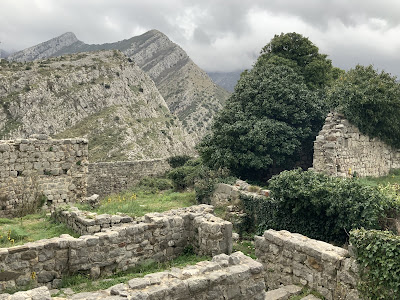
The next day I hiked up the road to Stari Bar, the old town. This spot was virtually abandoned when I was there, which added an extra level of atmospheric spookiness to the ruins of the monastery, mosques, and fortress. The place has seen many uses over the years. The churches were mostly converted into mosques by the Turks, then used to store large amounts of gunpowder, which, when the conspicuously pointy buildings on top of a conspicuously pointy hill were inexplicably struck by lightning, then blew up. (Really, it seems like someone might have pointed out that this was a possibility.)

Stari Bar from the approach

Ruins and mountains

The Montenegrin flag flying over the ramparts

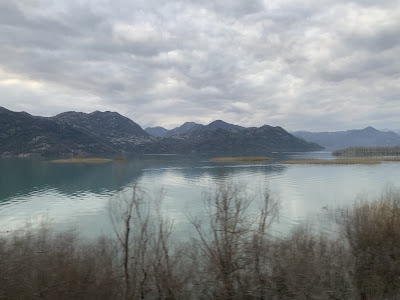
After lunch surrounded by adorable (if scruffy) cats, it was time to leave the Adriatic behind for good. I hopped on a train that traversed the country south-to-north, going back via Podgorica to Kolašin, in the hills. The line – and in fact the whole Montenegrin rail network – is a marvel of engineering, and was mostly constructed during the twentieth century. Heading north, after a long tunnel through the coastal mountains, the line crosses Lake Shkodër on a bridge/causeway. It then makes its way across the plains to Podgorica, and thence snakes up into the hills, crossing the Mala Rijeka viaduct pictured above, When it was built, it was the world’s highest viaduct, a title it held until 2001. I also love how in this part of the world the stationmasters – impeccably outfitted with little cap – always stand proudly in front of their stations when trains are going past, even when the train doesn’t stop.

Retro chic in the compartments on the train

Lake Shkodër from the causeway

After Mala Rijeka, darkness started to fall, and simultaneously we ascended into thick, all-encompassing fog. Judging by phone signal, we were in tunnels for much of the onward journey, but honestly it was hard to tell by looking out of the window; I begin to see why they called this place Black Mountain.

Kolašin, my destination, also gets short shrift in Lonely Planet, being described only as the gateway to the Biogradska Gora national park. This time I really can’t judge, as it’s pitch black and raining, and if all goes to plan I won’t be here for long. I trudged damply down the road into town, found somewhere to get food and charge my iPad, and returned to the station.

One thing that can’t be said about the Montenegrin rail system is that passengers are kept well-informed. There are no signs on the outside of the trains, no departures board, and no announcements once you’re on the train. I guess that, when your country’s entire rail timetable fits onto one sheet of A4 paper, locals mostly know what the trains are and where they’re going. By this point I’ve traversed almost all of the Montenegrin passenger rail network, the exception being the stretch north to Bijelo Polje and onward into Serbia, which is what I’m booked onto tonight, one of Europe’s less plausible sleeper journeys. Excited by this prospect, I was surprised and not particularly amused when the stationmaster interrupted my blogging to brusquely inform me that the train wouldn’t be running due to track damage north of Bijelo Polje. With zero alternative on offer (nonchalant shrug from the stationmaster), I started looking for places to hole up in Kolašin. Ten minutes later I was informed that a train would, in fact, be running after all – but a) only as far as Bijelo Polje, where I’d have to wait two hours for a connection, and b) half an hour late. This is much better than nothing, so we’ll see how it goes! And in all likelihood I will be somewhat sleep-deprived tomorrow…